At a crossroads: How Pitts Trailers is building the next 50 years
Key Highlights
- Pitts Trailers has invested heavily in new equipment, automation, and facility upgrades to improve manufacturing efficiency and product quality.
- The SWAT team initiative increased employee wages, professionalized the workforce, and reduced overtime by implementing rigorous training and accountability measures.
- Automation of sheet metal cutting, structural steel processing, and sub-assembly lines has streamlined production and minimized bottlenecks.
- Real-time data collection and inventory management enable precise tracking of job progress, material use, and labor hours, facilitating continuous process improvements.
- Despite modernization, Pitts remains committed to its community and family-oriented culture, emphasizing employee development and local support for future growth.
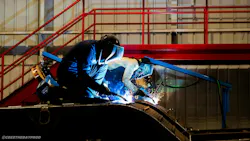
PITTSVIEW, Ala.—For much of its 50-year history, Pitts Trailers built its reputation on engineering innovations that helped loggers haul more payload and contractors move equipment more efficiently.
Today, the company is focused on a different challenge: building custom trailers faster, more consistently, and with fewer labor hours.
"I want to build custom trailers efficiently," President JP Pierson told TBB. "I want to find a way that I can have prescribed packages that accommodate the customer's need that are custom to them, but not custom to me."
Under Pierson, who joined Pitts Enterprises in 2006 and has been involved in all facets of the business and in various business units, Pitts has spent the past five years investing heavily in facilities, equipment, and manufacturing processes as it works to transform itself from a traditional trailer manufacturer into a more data-driven operation.
The goal is significant. Pitts is working to reduce some products that once required roughly 250 labor hours to build down to about 100 hours, Pierson explained.
"Like in all business, you've got to be a shark: If you're not swimming, you're dying," he said. "I want to get the most accurate information—both to the customer, but also to my supply chain and engineering and production teams. There's always room for improvement in the process, and the further you improve the process, the further you improve the product, and the happier your customer is."
The company's roots trace back to 1976 when founder Andrew Pitts operated East Alabama Truck Sales at a crossroads in Pittsview near the sawmill, selling used trucks to area loggers. When a customer asked him to source a logging trailer, Pitts decided to build one instead. That decision launched what would become one of the country's most recognized trailer brands and the market leader in forestry equipment.
A turning point came in 1982 when Jeff Pitts joined the business and introduced the use of fabricated high-tensile steel I-beams in log trailers. The lighter-weight design reduced trailer weight by as much as 2,000 lbs., allowing operators to haul additional payload and helping Pitts capture a dominant share of the U.S. log trailer market.
"I owe everything to my father. He started this business from scratch," Jeff Pitts said. "I learned everything I know about this business from him. I was so fortunate to have him as a personal and business mentor for over 20 years."
Pitts got into the hydraulic detachable market in the 1990s, with its first major redesign in 2013 with the introduction of the Contender Series. In 2023 Pitts advanced the product again with the introduction of the Contender GT series followed by the Contender GT40 last year.
Today, Pitts remains the largest private employer in Russell County, but company leadership has shifted the focus for the coming 50 years: Future growth depends less on product innovation alone and more on manufacturing excellence.
The SWAT team approach
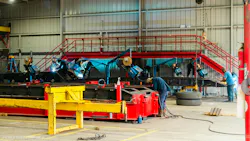
One of the most visible examples of that effort is Pitts' Special Welding and Tactics, or SWAT, team, as Pierson explained.
The SWAT team initiative was specifically designed to raise pay rates in exchange for a more rigorous and accountable manufacturing process.
-
Wage increases: Employees selected for the SWAT team saw their pay rates increase by $3 to $10 per hour.
-
Overtime reduction: A central goal of the program was to eliminate the need for overtime. Pierson noted that the target was for employees to make more money in a standard 40-hour week than they previously earned while working an additional 5 to 10 hours of overtime.
-
New career paths: The program created positions that did not previously exist at the facility, such as lead manufacturing tech, allowing employees to advance within the company.
The SWAT team concept shifted the company philosophy toward professionalizing the labor force and improving the daily experience of the workers.
-
Elite status through accountability: To join the team, current employees had to go through a formal internal hiring process, which included a new application, drug test, welding test, written exam, and oral interview.
-
Eliminating frustration: The "kitting initiative" was designed to organize parts and "eliminate any built-in excuses of inefficiency." By providing "clear marching orders" and ensuring everything was presented to the welder in order, the company aimed to make the job easier and more predictable.
-
Investment in equipment: To support the team, Pitts Trailers invested approximately $250,000 in top-of-the-line Miller welding machines and new booms to make the physical labor easier for the staff. Pitts has now ordered another $250,000 worth of Miller machines for the next SWAT team cell.
-
Facility improvements: Morale was further supported by a cleaner, brighter work environment, complete with new LED lighting and upgraded ventilation systems in production areas.
Equipment upgrades
Additional investments, as Pierson pointed out on TBB's tour of the main facility, included:
-
A laser and automated shelf system: Installed in late 2023, the system automates sheet metal cutting and material handling, allowing parts to be staged for assembly ahead of production schedules.
-
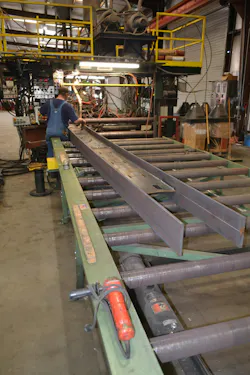
Structural steel processing: The company added CNC beam lines to automate cutting, coping, and drilling of heavy structural steel components—reducing manual layout and cutting time.
-
Paint booth upgrades: Enhancements to blast prep and paint systems ensure a consistent finish and improved corrosion resistance across all lines.
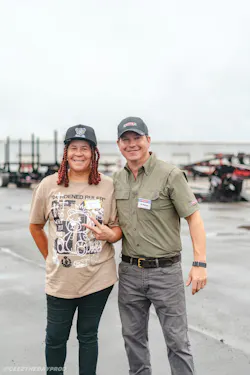
 Pitts Enterprises CEO Jeff Pitts makes the rounds of his hometown.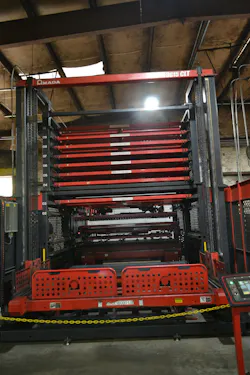
Sub-assembly integration
Indeed, a major theme of the tour was the integration of sub-assembly lines to streamline main production tracks.
By moving component assembly—such as crossmembers, suspension sub-frames, and neck assemblies—off the main assembly lines, workers can focus on final fit-up and welding without bottlenecks.
"We want to build as much off line as possible," Plant Manager Dustin Preslar said. "If we can build it in a fixture off line, it's faster, it's safer, and it's higher quality. When it comes to the main line, it's just set-and-weld."
General Manager Brandon Fretwell added that this approach relies heavily on precise component fitment, which is made possible by standardizing engineering drawings and parts catalogs.
"If the parts fit right every single time, the welder isn't spending time trimming, grinding, or fitting," Fretwell said. "They're just building."
Data-driven production control
Underpinning these physical shop floor changes is a push toward real-time data collection and inventory management.
Pitts has implemented shop-floor tracking tools to monitor job progress, material consumption, and labor hours per station.
-
Work-in-process tracking: Production managers can view real-time status updates for every trailer moving through the plant.
-
Inventory control: Kitting components by job ensures parts are present before a trailer enters a workstation, preventing line stoppages.
-
Performance metrics: Labor hour tracking allows managers to identify bottlenecks, refine standard hours, and continuously train personnel.
"We're capturing data at every step now," Pierson said. "That data tells us where our inefficiencies are and gives us a clear roadmap for how to fix them."
A culture rooted in community
While Pitts Trailers is adopting modern manufacturing practices, leadership emphasizes that the company's core identity remains tied to its people and its home in Pittsview.
Jeff Pitts noted that maintaining the company's family culture and supporting the local community are as important as meeting production targets.
"We've been here for 50 years, and our success is directly tied to the hard-working people in this area," Pitts said. "As we grow and change how we manufacture, that core commitment to our employees and our community isn't going anywhere."
Looking ahead, Pierson sees the combination of data-driven processes, heavy facility investment, and a skilled workforce as the recipe for the company's next half-century.
"We're respecting where we came from, but we're building for where we need to be," Pierson said. "The goal is simple: Build the best trailer possible, as efficiently as possible, for the next 50 years."
About the Author
 Kevin Jones
Kevin Jones
Editor
Kevin has served as editor-in-chief of Trailer/Body Builders magazine since 2017—just the third editor in the magazine’s 60 years. He is also editorial director for Endeavor Business Media’s Commercial Vehicle group, which includes FleetOwner, Bulk Transporter, Refrigerated Transporter, American Trucker, and Fleet Maintenance magazines and websites.
Working from Beaufort, S.C., Kevin has covered trucking and manufacturing for nearly 20 years. His writing and commentary about the trucking industry and, previously, business and government, has been recognized with numerous state, regional, and national journalism awards.