Global aluminum price plus U.S. tariffs drive OEM rethink
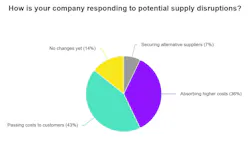
Going into a second year of 50% aluminum tariffs, combined with the geopolitical crisis in the Middle East that has impacted major global producers in the region, U.S. trailer manufacturers are looking into their own pricing structures and possible alternatives to aluminum in their products.
Indeed, the transportation sector, a primary consumer of aluminum, is particularly challenged by this volatility. Despite rising costs, OEMs rely aluminum to meet lightweighting targets, particularly around EV adoption.
The commercial trucking segment, meanwhile, faces a more complex environment. While aluminum remains essential for Class 8 cabs and trailer structures, the industry is grappling with excess freight capacity and slim cash flows—straining capital expenditures for new aluminum-intensive equipment.
Complicating matters further, the American Trailer Manufacturers Coalition recently filed antidumping and countervailing duty petitions on trailers and subassemblies from China and Mexico, alleging material injury from subsidized imports.
And as the 2026 USMCA "sunset" review looms in July, the strategic focus is shifting from simple cost-minimization toward securing traceable, domestic value chains capable of weathering a fragmented global production map.
What they’re saying
TBB made the rounds at the TTMA convention, collecting the thoughts of industry leaders on the impact of high global aluminum prices combined with the ‘all-in’ Midwest Premium, or going market rate for aluminum at delivery, reflecting the balance of regional supply, demand, logistics, and trade policies. The Midwest Premium has climbed from less than $500 per ton to more than $2,500 in just three years.
FTR Chairman Eric Starks was skeptical about USMCA remaining largely intact.
“I fundamentally believe that the administration is going to blow up USMCA, that we are going to have bilateral agreements with Mexico and with Canada, and if I had told you a year ago and said that we have a worse relationship with Canada than we do with Mexico, none of you would have believed me,” Starks said. “And what's really difficult right now is we get a significant amount of raw commodities coming down from Canada. We are shooting ourselves in the foot by having this type of antagonistic environment with Canada, and I don't fully understand it.
“We get a significant amount of aluminum from Canada, or we did. We do not produce aluminum here in any quantities that matter, so we have to rely on other markets; this is a cost pressure that does not go away. Carriers are going to have to start to make some decisions on what type of equipment they're willing to pay for, because that price point is going to continue to be very high.”
Starks noted that but until there's some clarity, the cost structure doesn't make sense.
“It's easier to pay the tariff or pay the extra cost than it is to materially shift industries back into the U.S. market, so I think we have several years of inflationary pressure.”
Great Dane Executive Director Category Management Rob Jansky is responsible for supplier development and negotiation and is a supply chain expert. He noted that the company is facing the same challenges as the rest of the industry.
“We do our best to track the market but, with all the upheaval, we work closely with our aluminum suppliers to try to hedge as much as we can. We’re working with sales to try to say how much aluminum we want to buy, because we don't want to have too heavy of a position in this volatile market,” Jansky said. “That’s the other big key: We work closely with sales to understand what the temperature of the market is, and also to educate them so they can work with the customer base, so they understand why we're passing along what we pass along.”
Jansky added that the “level of uncertainty” is what is different in today’s aluminum market.
“If there's a big event, there's some certainty at the end of it,” he said. “Now you just don't know.”
Great Dane EVP, Industry Affairs & Strategic Accounts, Chris Hammond agreed.
“We've managed cost fluctuations for 100 years in this business, and we’ll manage them for the next 100 years. There's always a dynamic at play; it's just a matter of having conversations around it, and helping customers time things that work best for them,” Hammond said. “It's frankly that simple, and it always has been, and it always will be. Just with the war going on and capacity coming out, it's a bit of a shock right now—but this too will pass.”
Utility Trailer Manufacturing Co. CEO Jeff Bennett likewise suggested that everyone is dealing with aluminum supply “as best they can.” At Utility, reconsidering trailer design and construction is part of the plan.
“There are a lot of options that can go from aluminum back to steel. A lot of times we went to aluminum because it saved weight and cost, which was good for the industry. But if the economics move where the lines cross, that's where you go,” Bennett said. “So we are using a lot more steel cross members; we're using more steel wear bands; we have steel side skins, we have steel posts. These are things that you can do because steel even if steel is also being tariffed, we have more manufacturers [in the U.S.] for steel, and their competition keeps the price more reasonable.”
Bennett echoed FTR’s assessment that, despite tariffs, significant aluminum production will not be coming back to the U.S. anytime soon.
“Our electricity costs are too high, which is why in 2000 we had 30 smelters in this country, and now we're down to two, and maybe there's a third one in the works. People are going to find substitutes for aluminum and pay the tariffs—then we'll see where the ball finally lands,” Bennett said. “We're looking at designs that can do the same job as aluminum; we’re looking at high strength steels, we're looking at composites, we're looking at other technologies that we didn't have to look at before. That doesn't mean we're necessarily going to give up on aluminum, but we'll adapt, improvise, overcome.”
For Hyundai Translead, which currently builds its trailer in Mexico, aluminum tariffs plus the ongoing Department of Commerce trade investigation into trailer imports are “forcing a rewrite of our playbook,” CEO Sean Kenney said.
“We've seen aluminum rise, not only in the ingot price, but in the Midwest Premium. It hasn't been talked about as much, because that Midwest premium was so stable for so long,” Kenney said. “A lot of our strategy is to educate first, and transparency second. That's the way we went through the COVID supply and demand imbalance: We were transparent with everyone in the industry, and that's what we're doing now.”
That doesn’t mean everyone is going to like price increases.
“It's staggering when you see just how much aluminum going up—it's amazing,” Kenney said. “The one thing that's really not practical for us is to change from aluminum to an alternative product, like going from aluminum to steel in a reefer. It’s just not a practical thing, nor would the customers really want that.”
![International Monetary Fund, Global price of Aluminum [PALUMUSDM], retrieved from FRED, Federal Reserve Bank of St. Louis.](https://img.trailer-bodybuilders.com/files/base/ebm/trailerbodybuilders/image/2026/06/6a26329e2b975334faaad212-fredgraph_1.png?auto=format,compress&fit=max&q=45?w=250&width=250)
About the Author
 Kevin Jones
Kevin Jones
Editor
Kevin has served as editor-in-chief of Trailer/Body Builders magazine since 2017—just the third editor in the magazine’s 60 years. He is also editorial director for Endeavor Business Media’s Commercial Vehicle group, which includes FleetOwner, Bulk Transporter, Refrigerated Transporter, American Trucker, and Fleet Maintenance magazines and websites.
Working from Beaufort, S.C., Kevin has covered trucking and manufacturing for nearly 20 years. His writing and commentary about the trucking industry and, previously, business and government, has been recognized with numerous state, regional, and national journalism awards.