Key Highlights
- Wabash's Q2 revenue exceeded analyst expectations despite a 9.1% YoY decline, driven by strength in the Transportation Solutions segment and resilience in Parts & Services.
- Key indicators such as rising spot rates, tender rejection rates, and a growing backlog support the view that the freight market is finally recovering.
- Early opening of the 2027 order book reflects customer confidence and a shift from demand deferral to committed orders to address fleet aging.
- Trade policies, including anti-dumping duties and increased tariffs, are expected to favor domestic manufacturers like Wabash starting late 2026.
- The company is strategically increasing pricing to recover inflationary costs and preparing manufacturing capacity for a projected surge in trailer demand in 2027.
Has the freight recession finally turned the corner, and are fleets ready to start buying more equipment? And how are mid-year hopes for a second-half turnaround any different this summer than last year, or the year before? Wabash contends the rebound is underway.
The publicly traded trailer and truck body manufacturer reported second-quarter 2026 financial results that, while still reflecting the challenges of a prolonged downturn, provided the strongest evidence yet of a market recovery.
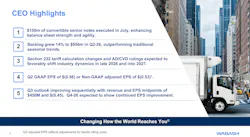
The company beat Wall Street’s revenue expectations, and management expressed a high degree of confidence that the "step forward off the bottom" has begun, bolstered by an atypical surge in backlog and significant shifts in federal trade policy.
“We are seeing a healthier combination of supply-side forces, safety-focused federal-led enforcement, and improving carrier economics. These factors are beginning to translate into better market fundamentals,” Wabash President and CEO Brent Yeagy said in a July 29 conference call with investment analysts. “Spot rates, contract rates, and tender rejection rates are moving in a direction that supports improved carrier profitability, and that matters because carrier profitability is what ultimately frees up capital to support increased replacement demand expenditure.”
For the quarter ended June 30, Wabash’s revenue of $417.2 million represented a 9.1% year-over-year decline but significantly outperformed analyst estimates of $402.9 million. The Transportation Solutions segment, the company's core driver, generated $354.7 million in revenue, while the Parts & Services segment showed resilience with a 6.1% year-over-year increase to $63.4 million.
Profitability remains a challenge as the company works through older, lower-priced backlog while absorbing inflationary material costs. Wabash reported a GAAP operating loss of $25 million.
Improving carrier economics
A central theme of the Q2 earnings call was the strengthening conviction that the freight market is finally correcting. Yeagy pointed to key indicators supporting this view:
- spot rates continued to strengthen, rising to approximately 40% above last year by June and surpassing contract rates;
- tender rejection rates have moved above 16%, which represents the highest levels since 2018;
- the ATA for-hire truck tonnage continues to run ahead of the prior year;
- the ISM Manufacturing Index has been in expansionary territory for 6 consecutive months; and
- the Logistics Managers' Index reached its highest level since early 2022.
“We are encouraged by the direction of these data points, and we are also encouraged by our own backlog. Backlog grew to $956 million at the close of Q2 2026, a 14% increase quarter over quarter,” Yeagy said. “While continuing the double-digit growth that was experienced in the first quarter, the more important point is the pattern. This was the first time in the company's history that we had experienced backlog growth in the second quarter. That tells us that the customers are beginning to move from deferral to committed demand as they work to stop the 3 years of fleet aging.”
Also in an unusual move, Wabash opened its 2027 order book in late June—months earlier than normal. This was done in response to customers seeking earlier visibility into delivery windows and pricing as they look to stop three years of fleet aging.
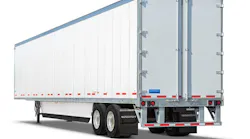 Wabash DuraPlate Dry Van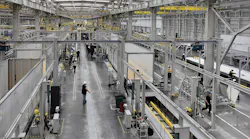
Tariffs and trade disputes
Wabash management expects the back half of 2026 and all of 2027 to be influenced significantly by trade issues. The company has been a vocal advocate for relief against what it describes as "unfairly traded imports.” Several trade policy developments are expected to “level the playing”field for domestic manufacturers:
AD/CVD Rulings: Affirmative preliminary rulings have established significant duties on Chinese imports. Countervailing duties are set between approximately 82% and 129%, while anti-dumping duties are approximately 131%.
Section 232 Tariffs: Recent modifications to Section 232 have resulted in a 25% tariff rate being applied to the full customs value of imported trailers.
Additionally, these tariffs and duties are stackable. Wabash, which procures approximately 95% of its materials from the U.S., maintains the company is uniquely positioned to benefit from these changes. Management believes these policies will favorably shift industry dynamics starting in late 2026, allowing Wabash to gain market share and restore disciplined pricing across the industry.
Pricing recovery, production outlook
With demand signals flashing green, Wabash is now focused on recovering the inflationary costs it absorbed during the downturn.
“In Q1 and early Q2, we weren't really in a great place from a pricing standpoint. That had really changed coming into mid-second quarter. We've made substantial pricing increases in almost 3-week increments for the last 9 to 12 weeks with the pretty substantial amount of backlog that's flowed into the business,” Yeagy said. “We're pricing today based on the reasonable expectation of covering the inflationary costs that we've received over the last two to three years. So it's a relatively straightforward conversation with our customers.
“It is not taking into account anything with countervailing or anti-dumping pricing factors at this stage. So we feel very comfortable on the general market economics in terms of the pricing levels that we're able to quote, win, and achieve right now.”
The company is also preparing its manufacturing footprint for a high-volume 2027.
The Lafayette South plant has added 10,000 units of dry van capacity, providing Wabash with the ability to handle a market return to "replacement level" demand. Management and industry forecasters like ACT Research and FTR anticipate a significant jump in the trailer market to roughly 260,000 units in 2027, driven almost entirely by dry van demand.
Segment outlook
While the Transportation Solutions segment is the primary engine of the recovery, Parts & Services continues to provide a high-margin buffer. The segment delivered $63.4 million in revenue with a 9.4% operating margin, benefiting from a "step-up" in its upfit business profitability as startup costs from new sites in Chicago, Atlanta, and Phoenix begin to normalize.
In Q2 Wabash shipped 8,292 new trailers, up from 8,043 units in Q2 last year. New truck body shipments were down substantially, however, to 1,380 from 3,188.
Wabash’s outlook for the third quarter remains transitionary but positive, with revenue projected between $440 million and $460 million. While the company still anticipates an adjusted EPS loss for Q3, the trend of sequential improvement is expected to continue.
The combination of aging fleet equipment, improved carrier profitability, and a more protective trade environment are lining up for Wabash to transition from "painful trough" to a period of sustained growth and share gain as the industry enters 2027, management concluded.
About the Author
 Kevin Jones
Kevin Jones
Editor
Kevin has served as editor-in-chief of Trailer/Body Builders magazine since 2017—just the third editor in the magazine’s 60 years. He is also editorial director for Endeavor Business Media’s Commercial Vehicle group, which includes FleetOwner, Bulk Transporter, Refrigerated Transporter, American Trucker, and Fleet Maintenance magazines and websites.
Working from Beaufort, S.C., Kevin has covered trucking and manufacturing for nearly 20 years. His writing and commentary about the trucking industry and, previously, business and government, has been recognized with numerous state, regional, and national journalism awards.